
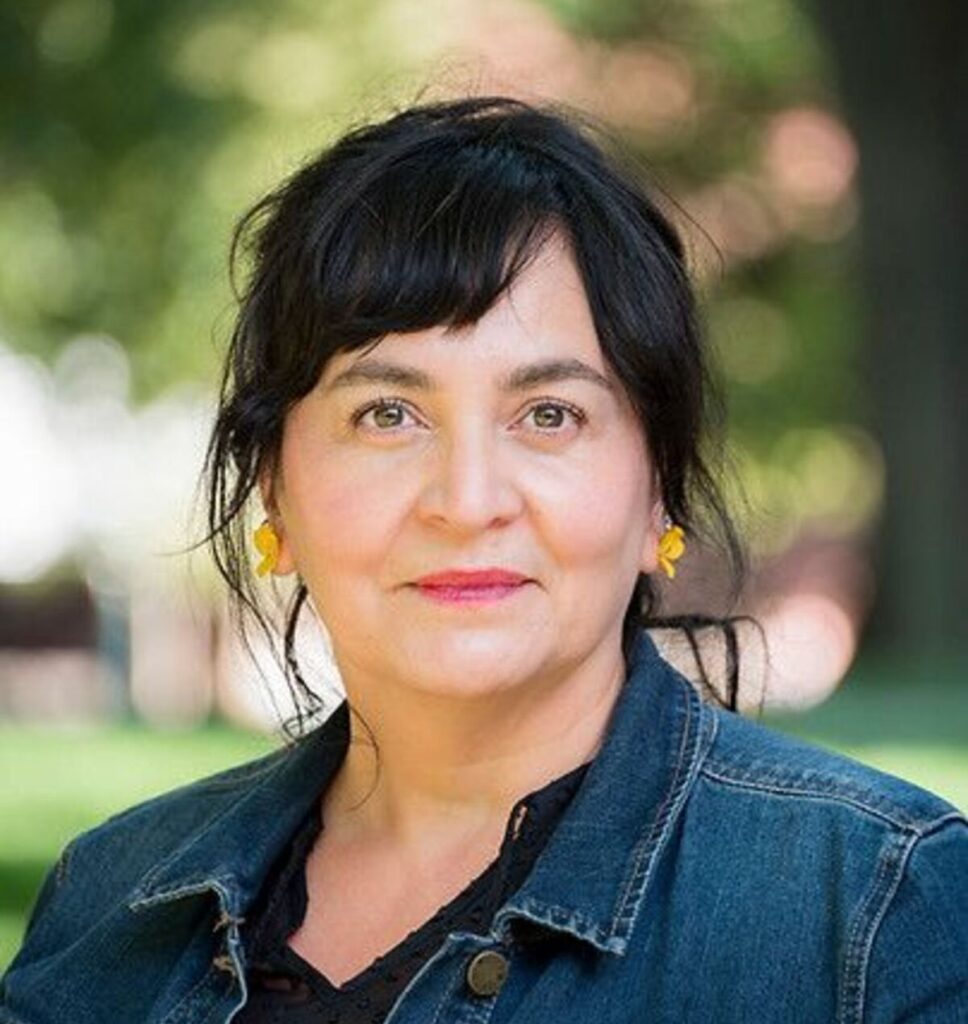
Research by Rutgers University–Camden Associate Professor Angélica L. González is featured in the December 9 issue of the peer-reviewed journal Nature Communications. The study investigates how environmental factors—including human-caused nitrogen deposition—shape the elemental content of plants and animals worldwide.
The article, “Nitrogen deposition reveals global patterns in plant and animal stoichiometry,” is co-authored by González and Dr. Olivier Dézerald of the French National Research Institute for Agriculture, Food, and Environment.
The research was conducted by an international working group of global scientists led by González and Dézerald, hosted and funded by the German Centre for Integrative Biodiversity Research (iDiv).
“Life is built from a few key elements, especially nitrogen and phosphorus, and their balance governs growth, reproduction, food-web dynamics, and biogeochemical cycles,” González said. “To better understand how environmental conditions influence this balance, we analyzed global data containing thousands of measurements of plants and animals to evaluate which environmental drivers—including atmospheric nitrogen deposition, temperature, and sunlight—best explain global variation in elemental content.”
The team found atmospheric nitrogen the most consistent global predictor of elemental composition, particularly in plants. In contrast, temperature and sunlight showed weaker and more variable relationships across ecosystems.
“Although multiple environmental factors influence organismal elemental content, human-driven nitrogen pollution leaves a clear global fingerprint on the chemistry of plants and animals,” González said. “These changes have important implications for how organisms grow, interact, and persist in a rapidly changing world.”
“Dr. González’s critical research exemplifies the power of international collaboration to address complex environmental challenges,” said Sandra Richtermeyer, provost and executive vice chancellor for academic affairs at Rutgers University-Camden. “Her work advances our understanding of how human activities are reshaping natural systems and informs conversations about potential solutions.”